How to Create a Budget Alarm in AWS: Complete Step-by-Step Guide (2026)

Protect Your AWS Account from Surprise Bills Using AWS Budgets & CloudWatch Alarms

Published: July 2026

One of the most essential skills every AWS practitioner, developer, and cloud engineer must learn before spinning up resources is setting up a Budget Alarm. Unexpected charges can happen quickly—whether it's an unstopped EC2 instance, an idle NAT Gateway, or forgotten EBS snapshots.

In this guide updated for July 2026, we will walk through every detailed step to create an automated AWS Budget Alarm that sends instant email notifications whenever your monthly spending exceeds your target limit.

Why You Must Set Up an AWS Budget Alarm Immediately

  • Prevent Unexpected Billing Spikes: Receive real-time email alerts before small costs turn into large bills.
  • Forecasted Cost Alerts: AWS Budgets alerts you when your projected monthly spend is predicted to exceed your budget.
  • Free Tier Protection: Ensures you don't accidentally cross Amazon Web Services free tier thresholds without knowing.

Prerequisites & Account Preparation

Before creating your budget, ensure you have enabled billing alerts in your AWS account preferences:

  1. Sign in to the AWS Management Console as the root user or an IAM user with billing permissions.
  2. Open the account dropdown in the top-right corner and click Billing & Cost Management.
  3. In the left menu, select Preferences (or Billing Preferences).
  4. Check the box for Receive Billing Alerts and click Save preferences.

Method 1: Creating an AWS Cost Budget (Recommended)

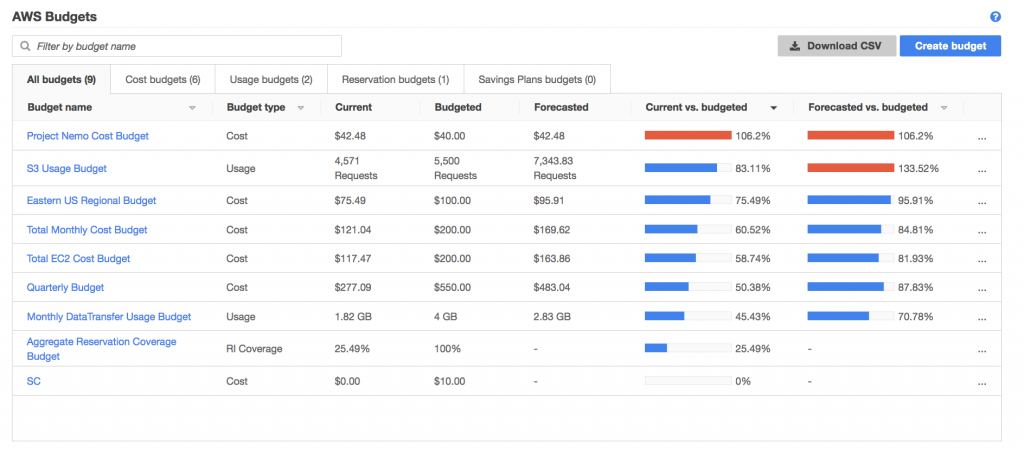
AWS Budgets allows you to set custom budgets that alert you when your costs or usage exceed (or are forecasted to exceed) your budgeted amount.

1 Open the AWS Billing & Cost Management Dashboard

In the top search bar of the AWS Management Console, search for Billing and Cost Management or AWS Budgets and click on the service result.
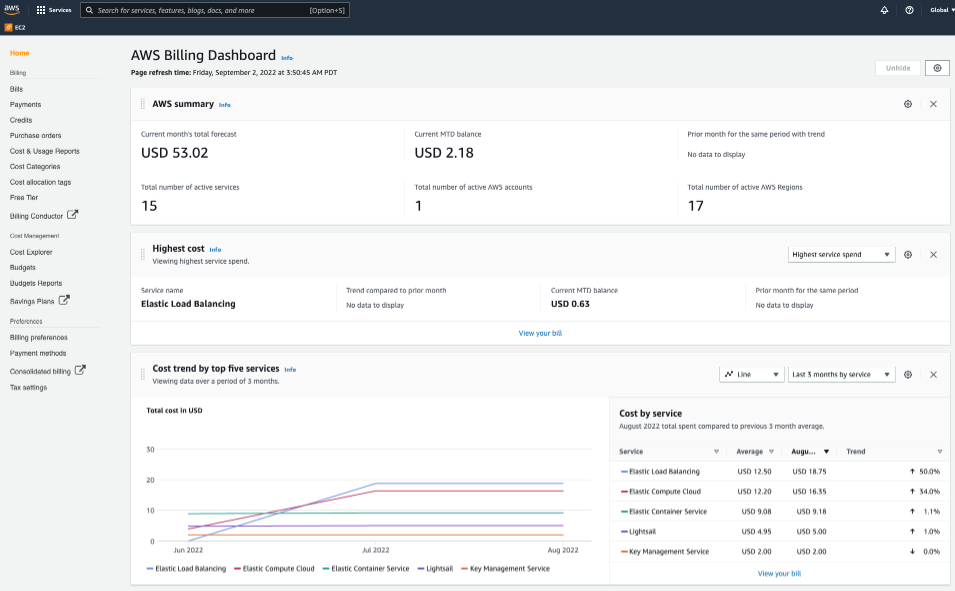
AWS Billing and Cost Management Dashboard

2 Navigate to Budgets & Click "Create Budget"

On the left-hand navigation pane, click Budgets under the Cost Management section. Then, click the orange Create budget button in the top-right corner.
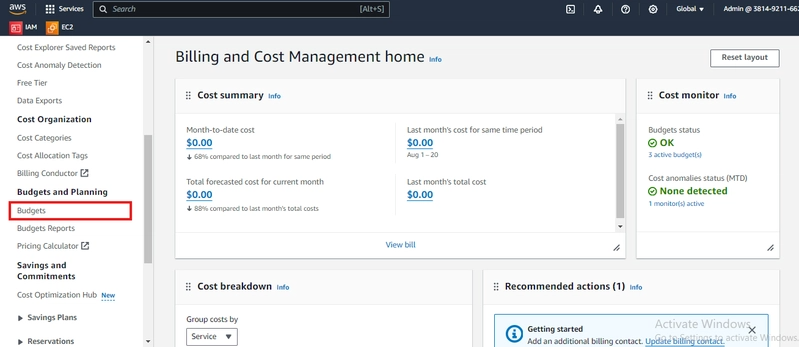
AWS Budgets Create Budget Selection

3 Select Budget Type (Cost Budget)

AWS offers template options as well as customized setups:

  • Select Customize (advanced) or choose the Cost budget - Recommended template.
  • Click Next at the bottom of the page.

4 Configure Budget Name, Amount & Period

In the Set budget details section, fill in the following details:

  • Budget Name: Enter a clear descriptive name (e.g., Monthly-DevOps-Learning-Budget).
  • Period: Select Monthly (you can also choose Daily, Quarterly, or Annually).
  • Budget Effective Dates: Select Recurring budget.
  • Budgeting Method: Select Fixed.
  • Enter your budgeted amount ($): Specify your maximum allowed monthly cost (e.g., 10.00 for $10 USD).
AWS Budget Target Amount and Period Setup

5 Set Up Alert Thresholds & Notification Emails

Click Next to proceed to the Configure alerts step. Here, you define when AWS should send you warning emails:

  • Click Add alert threshold.
  • Threshold 1 (Actual Cost Warning): Set to 80% of Actual cost. This alerts you when you reach $8 of your $10 budget.
  • Threshold 2 (Forecasted Overrun Warning): Click Add alert threshold again, set to 100% of Forecasted cost. This alerts you if AWS predicts your usage will exceed $10 by month-end.
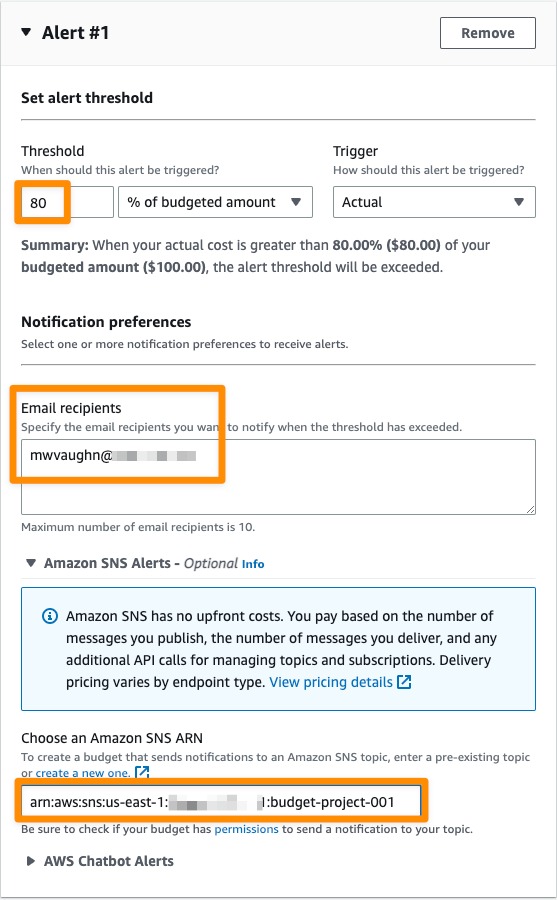
  • Notification Recipients: In the Email recipients field, type your email address (separate multiple emails with commas).
AWS Budget Alert Threshold and Email Configuration

6 Review & Confirm Budget Creation

Review all your budget configurations on the summary screen. Verify the budget name, target dollar amount, and recipient email address, then click Create budget.

Your new budget is now active! AWS will continuously monitor your spend and trigger alert emails instantly whenever thresholds are crossed.
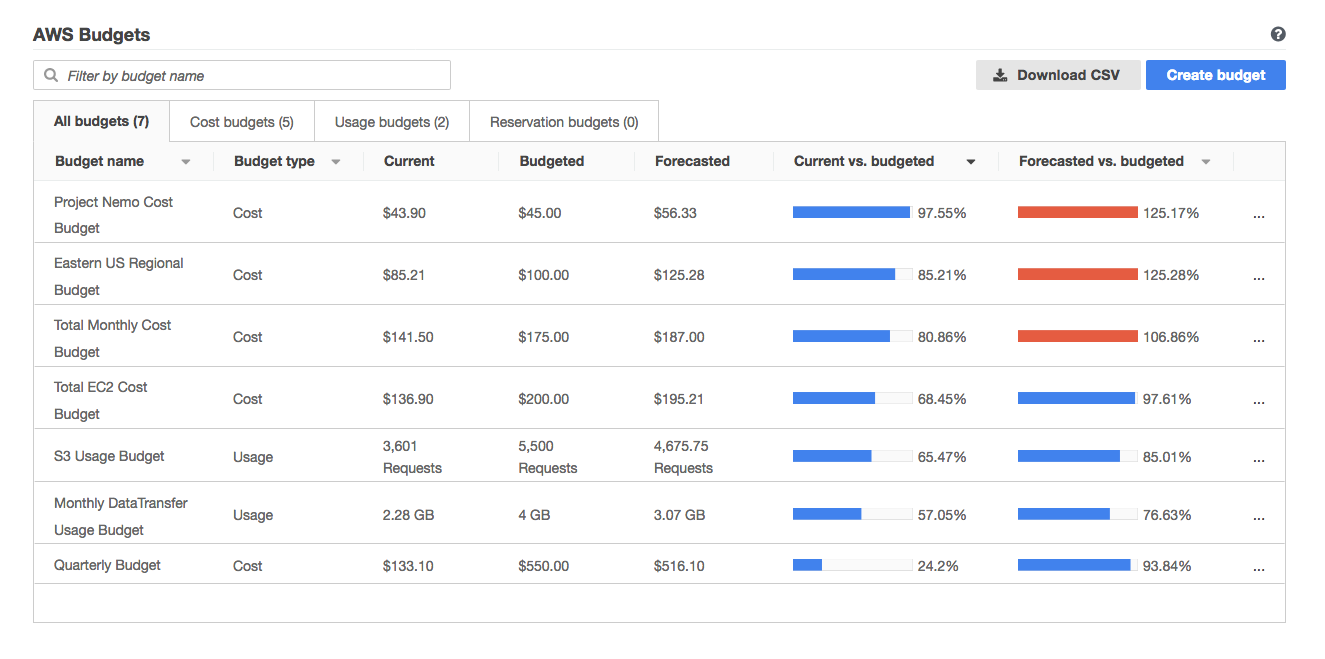
AWS Active Budgets Dashboard Overview

Method 2: Setting up a CloudWatch Billing Alarm

Alternatively, you can create a CloudWatch Billing Alarm using Amazon CloudWatch metrics for EstimatedCharges.

1 Open CloudWatch & Navigate to Alarms

Open the AWS Console, search for CloudWatch, and click AlarmsAll Alarms in the left menu.

2 Create Alarm & Select Billing Metric

Click Create alarm → Click Select metric → Choose Billing → Select Total Estimated Charge → Check the currency metric (USD).
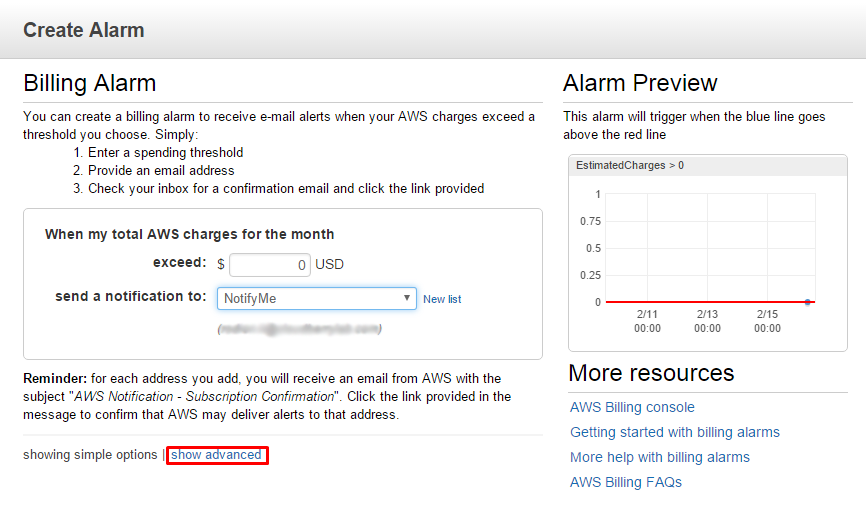
CloudWatch Select Billing EstimatedCharges Metric

3 Define Conditions & Configure SNS Email Notification

Set condition to Greater than and specify your limit (e.g., 10). In the Notification section, select In alarm, choose Create new topic, enter your email ID, and click Create alarm.

Note: Check your email inbox to confirm the Amazon SNS subscription link to start receiving alerts!
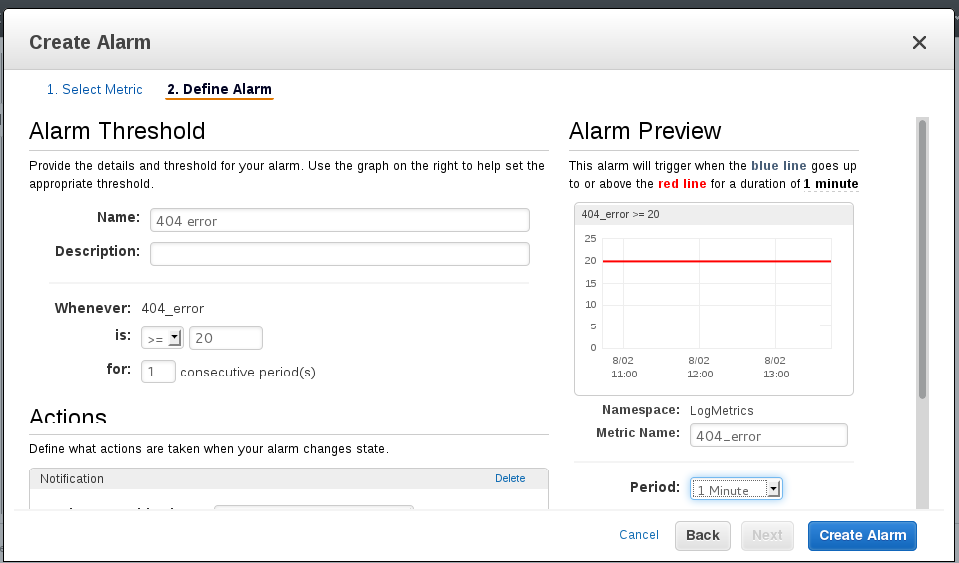
Create CloudWatch Billing Alarm Notification Setup

Pro-Tips for AWS Cost Management in 2026

  • Always Confirm SNS Email Subscriptions: If you use CloudWatch alarms or SNS notifications, click the confirmation link sent to your inbox. Unconfirmed subscriptions will not send emails!
  • Monitor Idle Resources Daily: Stop unused EC2 instances, delete unattached Elastic IPs ($0.005/hr when idle), and delete old EBS volumes.
  • Use AWS Free Tier Tracking: Regularly check Billing → Free Tier to track your 12-month free tier usage percentages.
👤
Vikas Ratnawat  From CloudDevOpsHub