There are no items in your cart
Add More
Add More
| Item Details | Price | ||
|---|---|---|---|

Project-6: AIOps-Powered Log Anomaly Detection System (SmartLog)
Automating IT Operations, Log Parsing & Incident Anomaly Detection using Python, Scikit-Learn Isolation Forest & Machine Learning
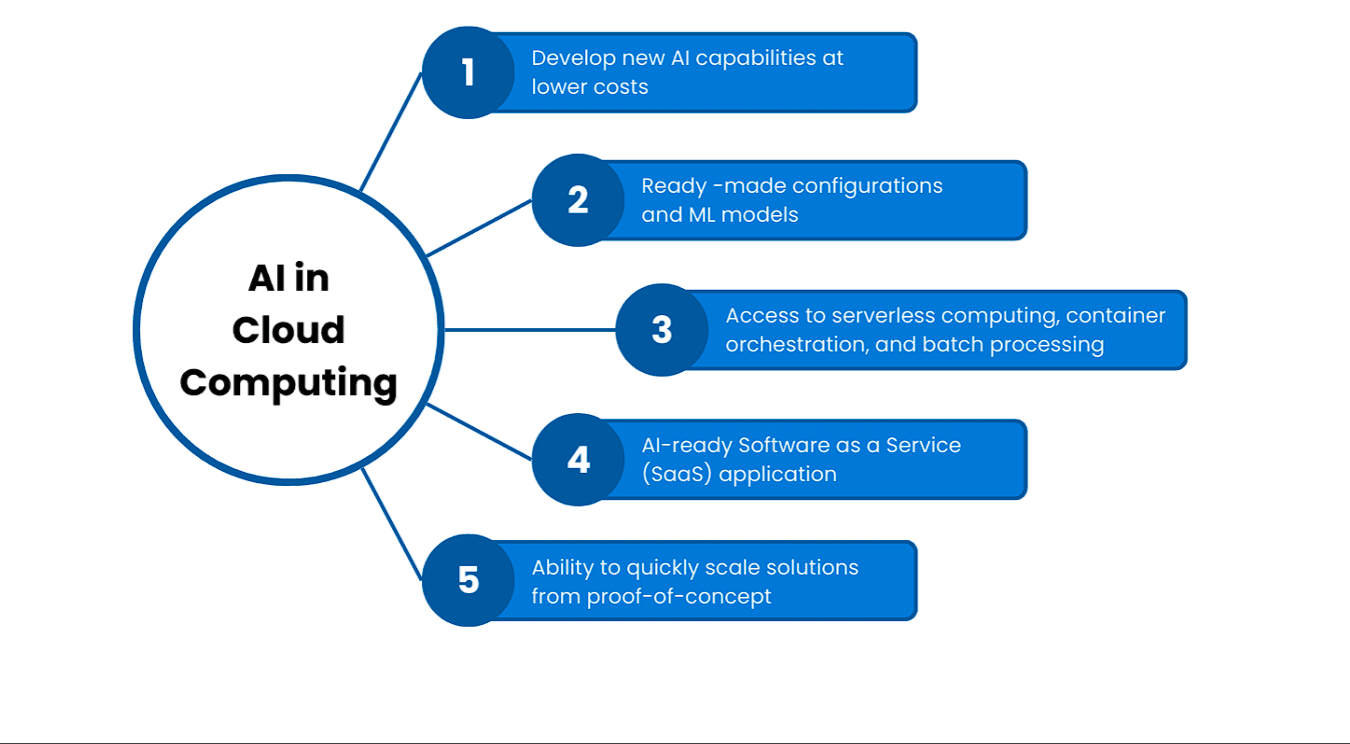
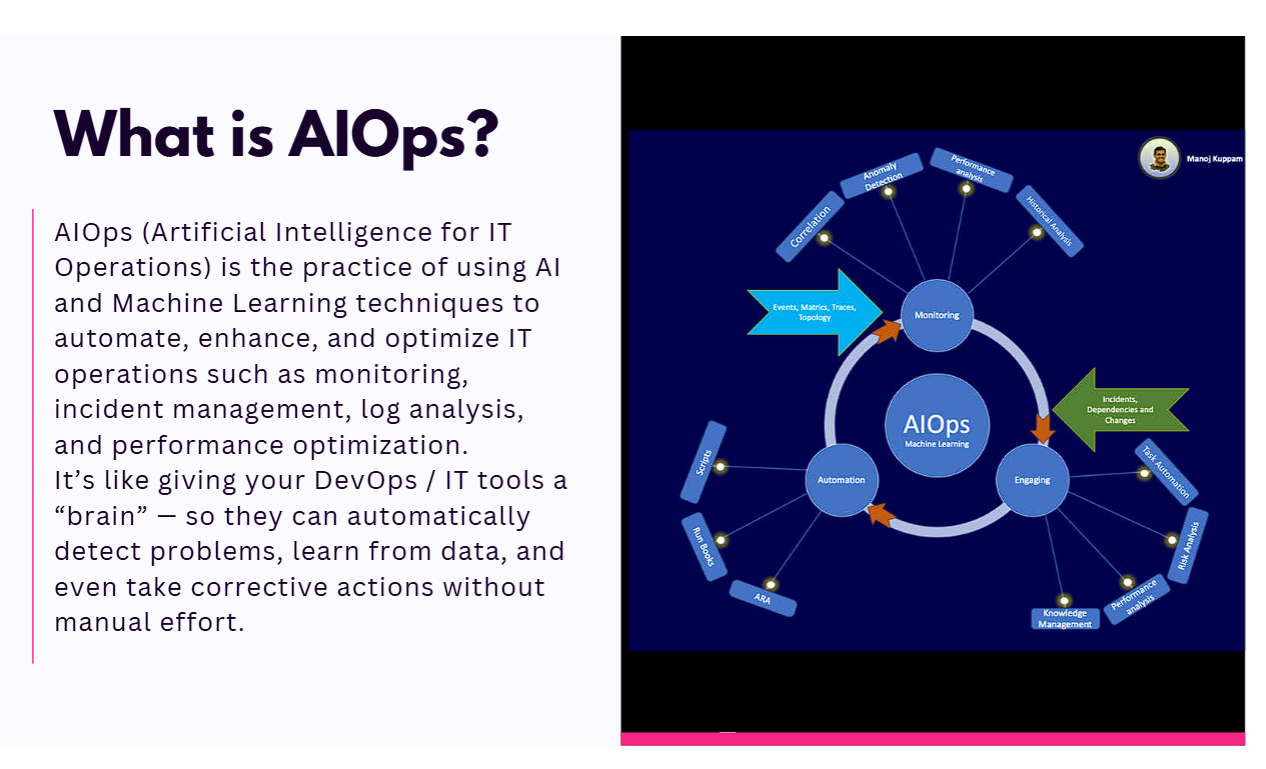
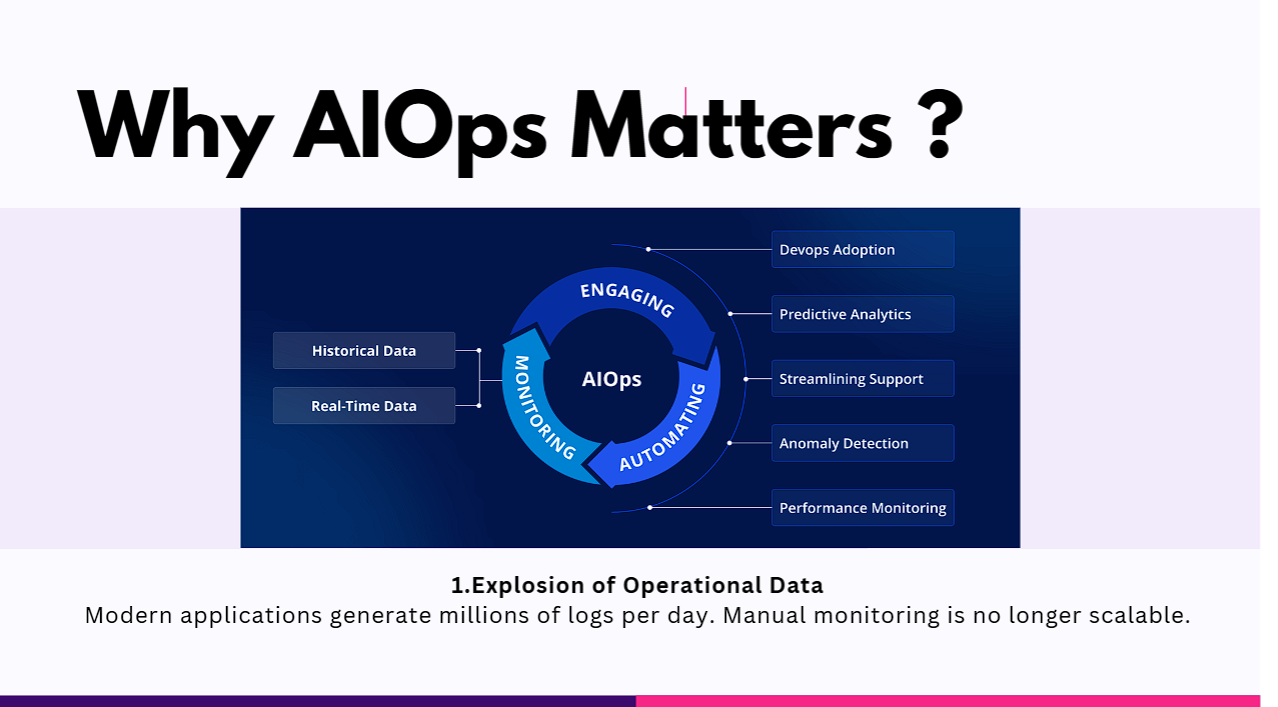
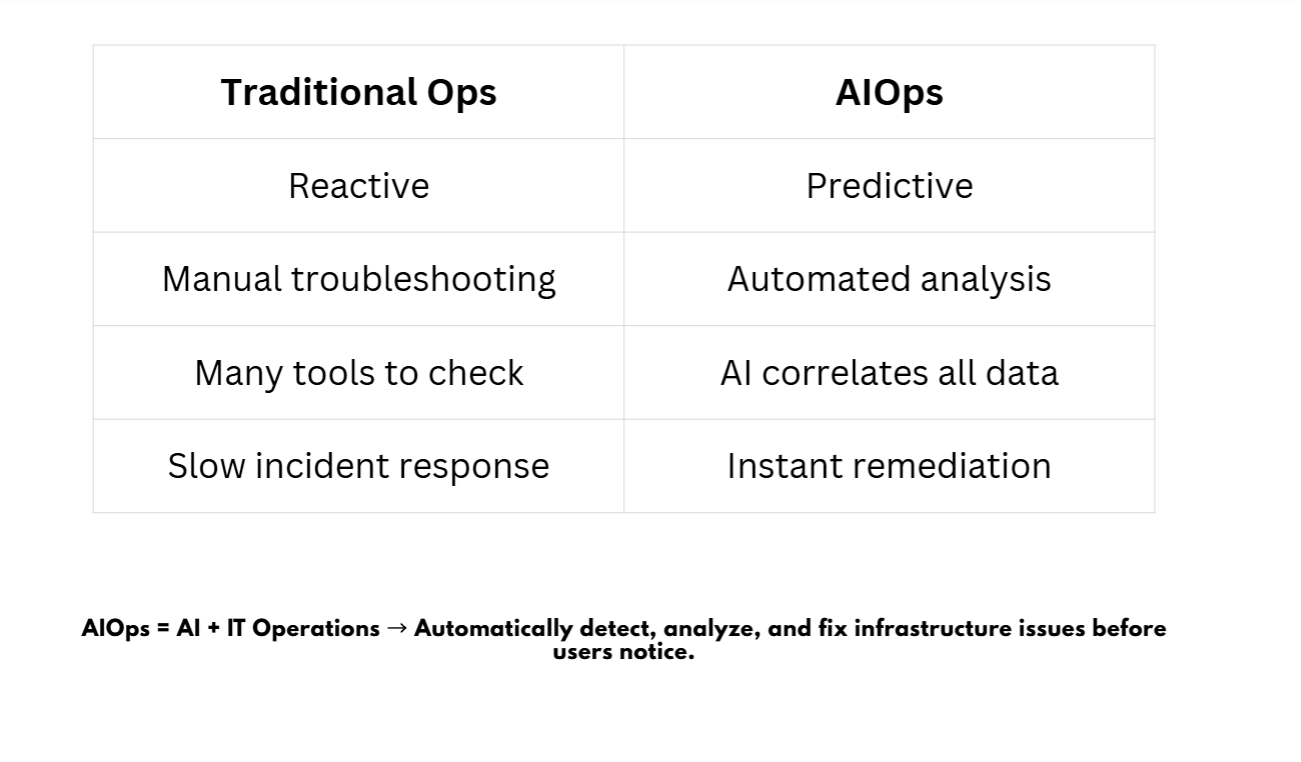
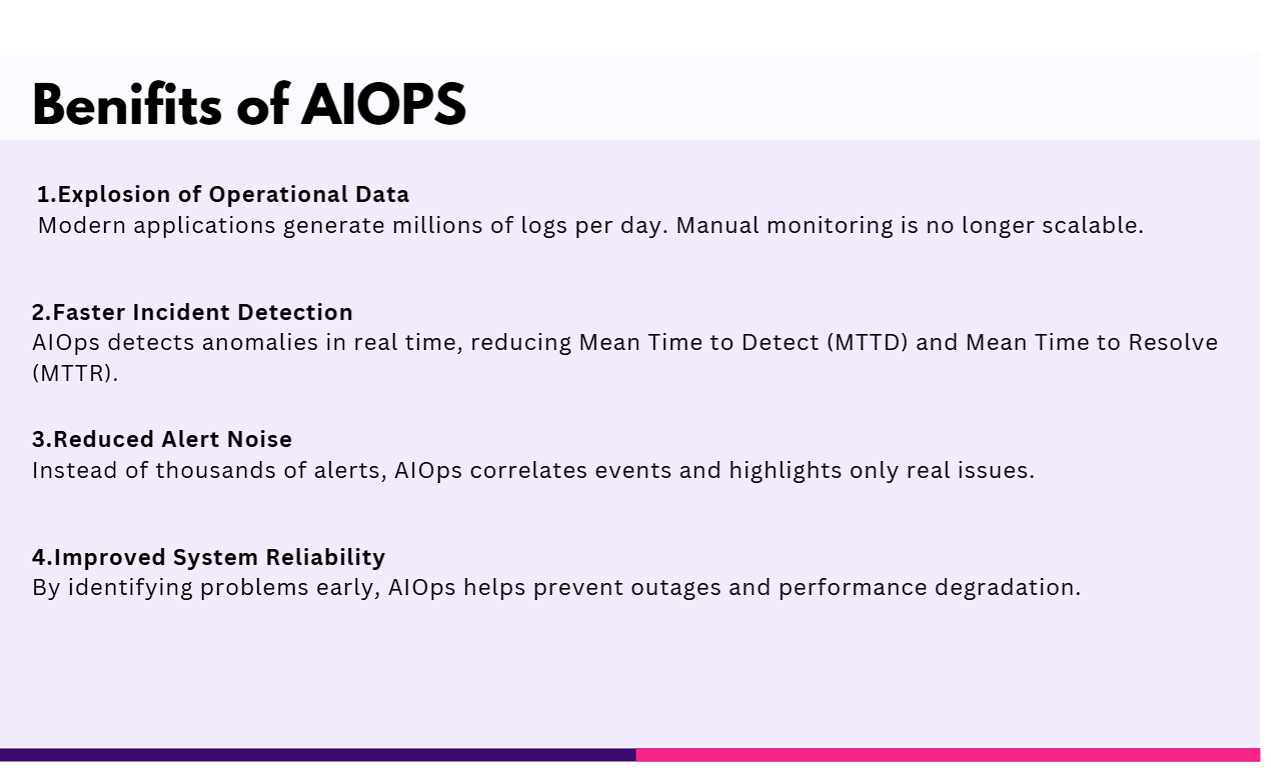
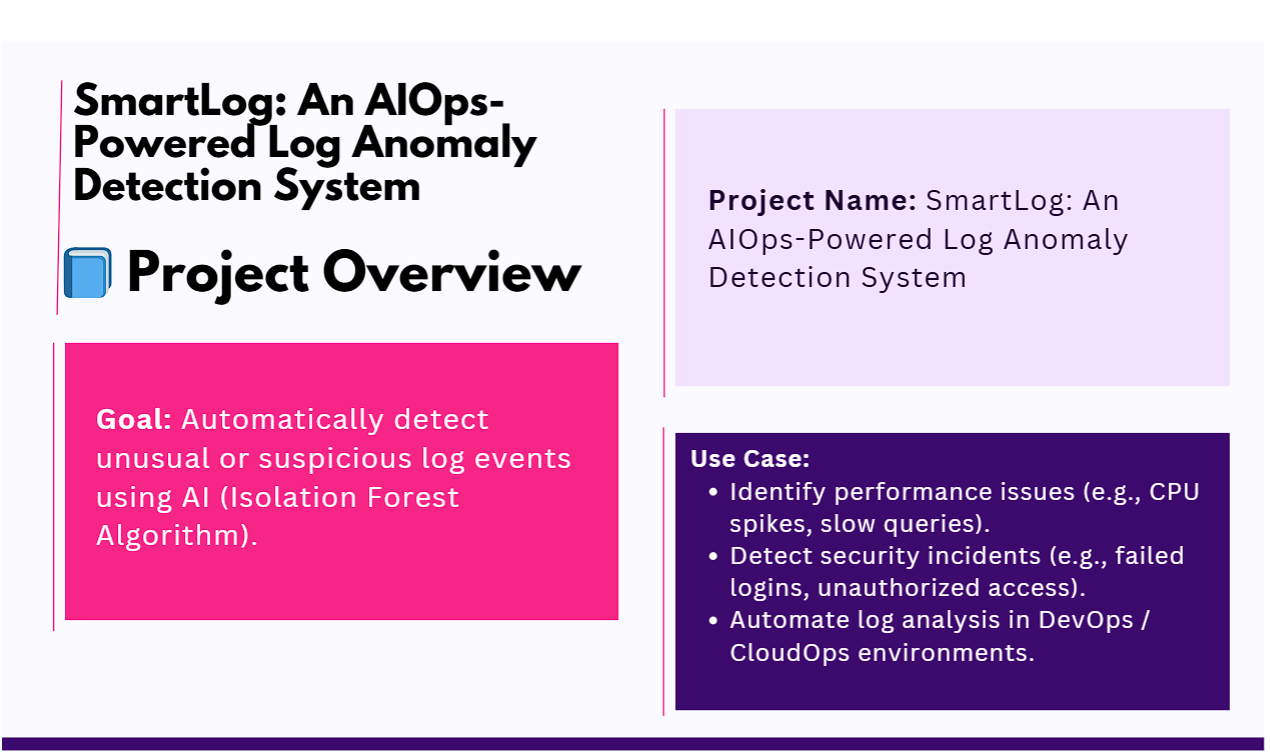
Modern enterprise cloud environments generate millions of logs, metrics, and network trace events per second. With microservices architectures and continuous deployments, manual log monitoring and fixed-threshold alerting are no longer scalable. AIOps (Artificial Intelligence for IT Operations) integrates Machine Learning into cloud operations to automate log anomaly detection, eliminate alert fatigue, and reduce Mean Time to Resolution (MTTR).
As applications transition to microservices and Kubernetes clusters, the volume of operational logs grows exponentially. Traditional rule-based alerts fail because they cannot adapt to dynamic cloud traffic variations.

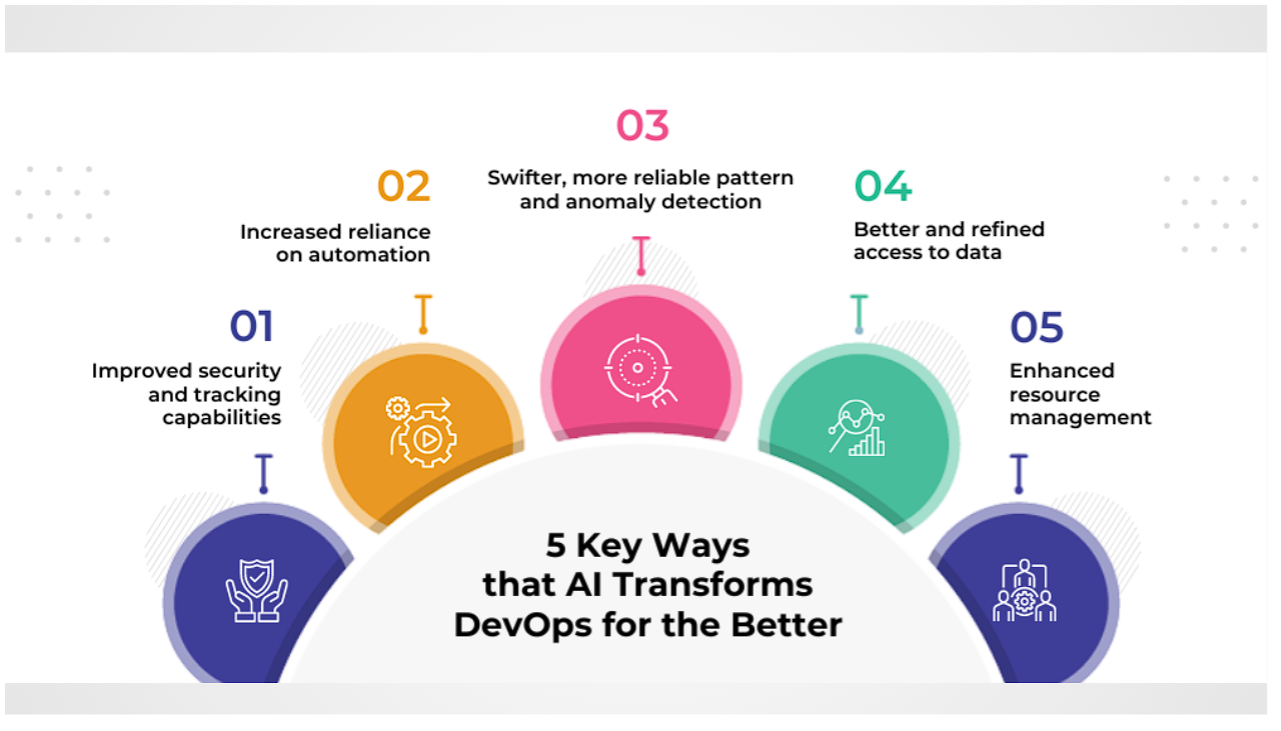
Detects unauthorized access patterns, failed login bursts, and zero-day threat vectors instantly.
Replaces static threshold alerts with self-learning AI agents for automated self-healing.
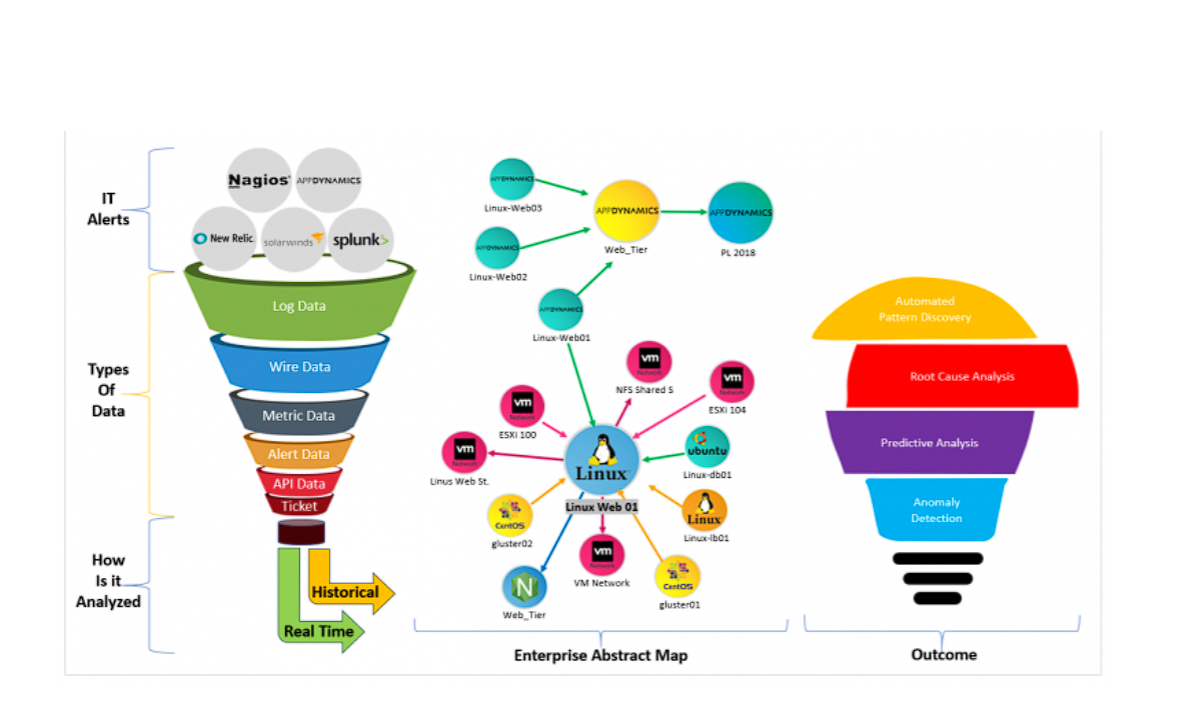
Identifies complex multi-log correlation patterns across distributed microservices.
Filters out thousands of redundant alerts and highlights only true root-cause incidents.
| Incident Response Step | Traditional DevOps Response | AIOps Automated Response |
|---|---|---|
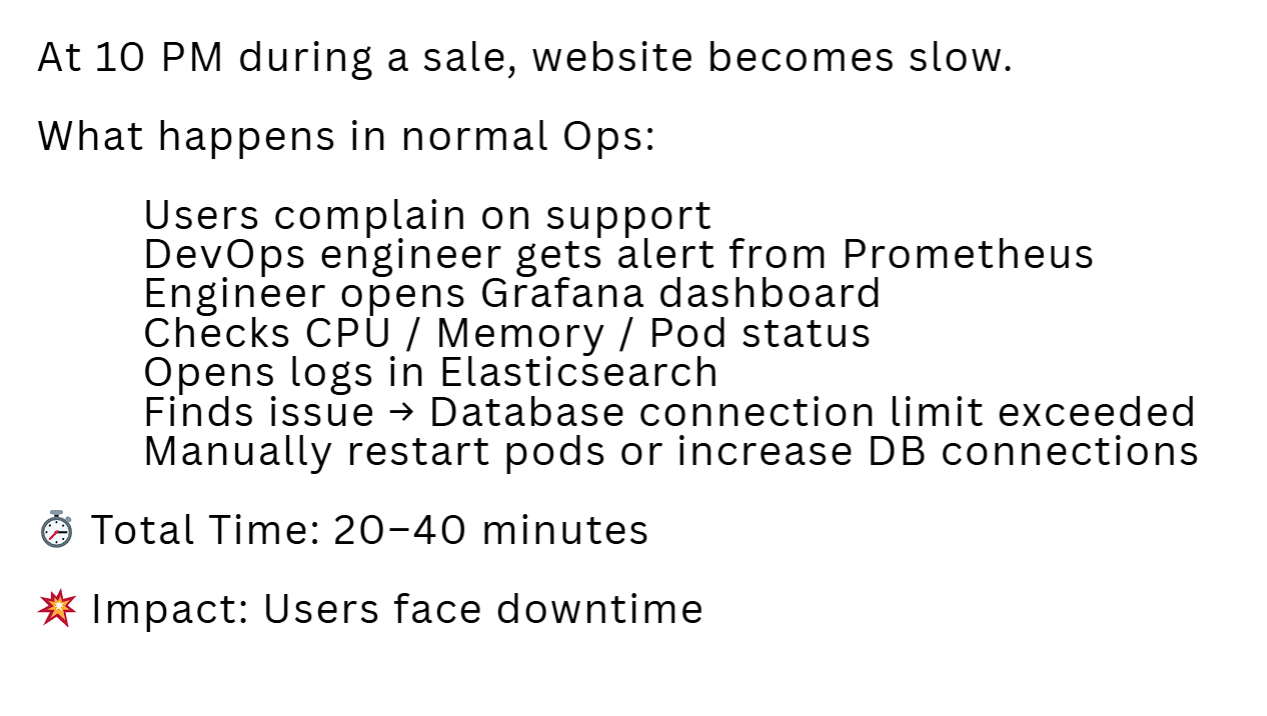
| Incident Trigger | Users complain on social media during 10 PM sale. | ML model detects subtle log pattern anomaly in 5 seconds. |
| Root Cause Analysis | Engineer spends 20-40 mins opening Grafana & Elasticsearch logs. | AI correlates metric spike with DB connection pool exhaustion automatically. |
| Remediation Action | Engineer manually SSHs into server to restart DB connection pool. | Triggered webhook auto-scales DB pool in 15 seconds. |
| Business Impact | 30+ Minutes Downtime & lost revenue. | Zero Downtime & zero user impact. |
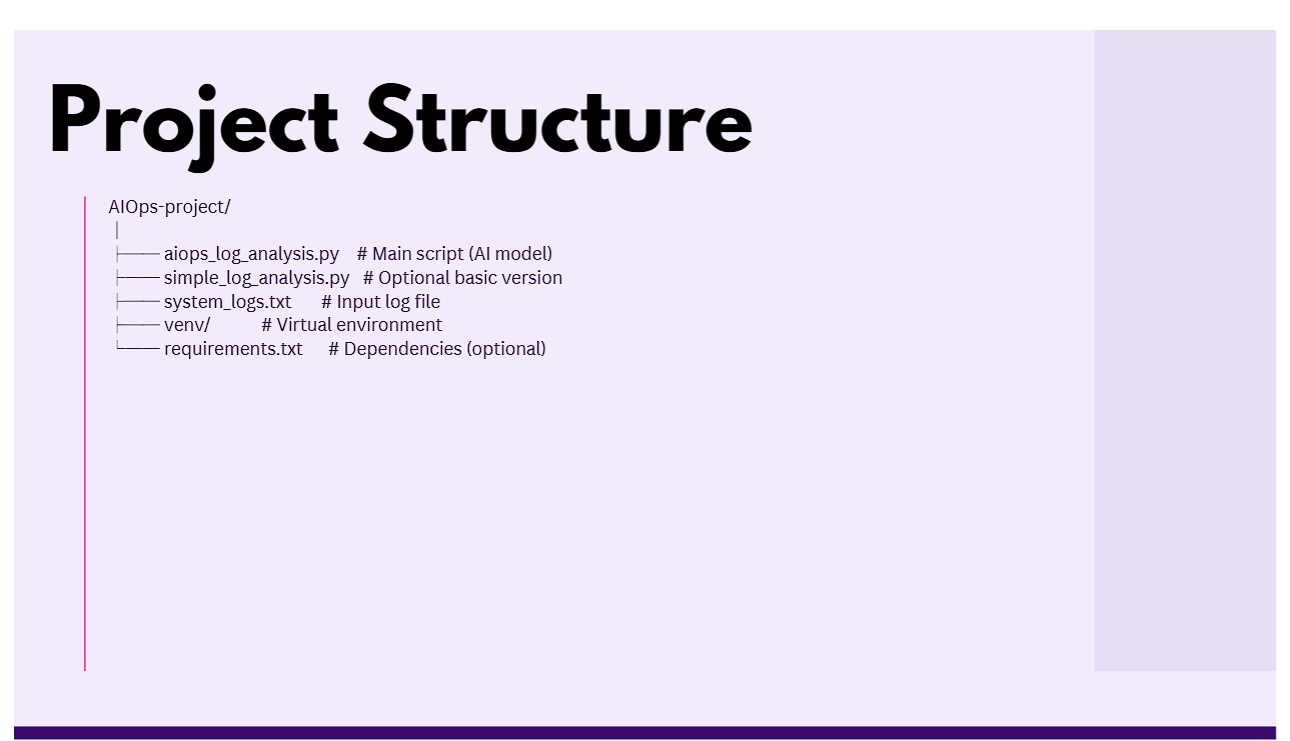
AIOps-project/
├── aiops_log_analysis.py    # Main AI/ML Log Anomaly Detector (IsolationForest)
├── simple_log_analysis.py   # Baseline Rule-Based Log Scanner
├── system_logs.txt          # Sample Log Dataset (INFO, WARN, ERROR)
├── requirements.txt         # Project Dependencies
└── venv/                    # Python Virtual Environment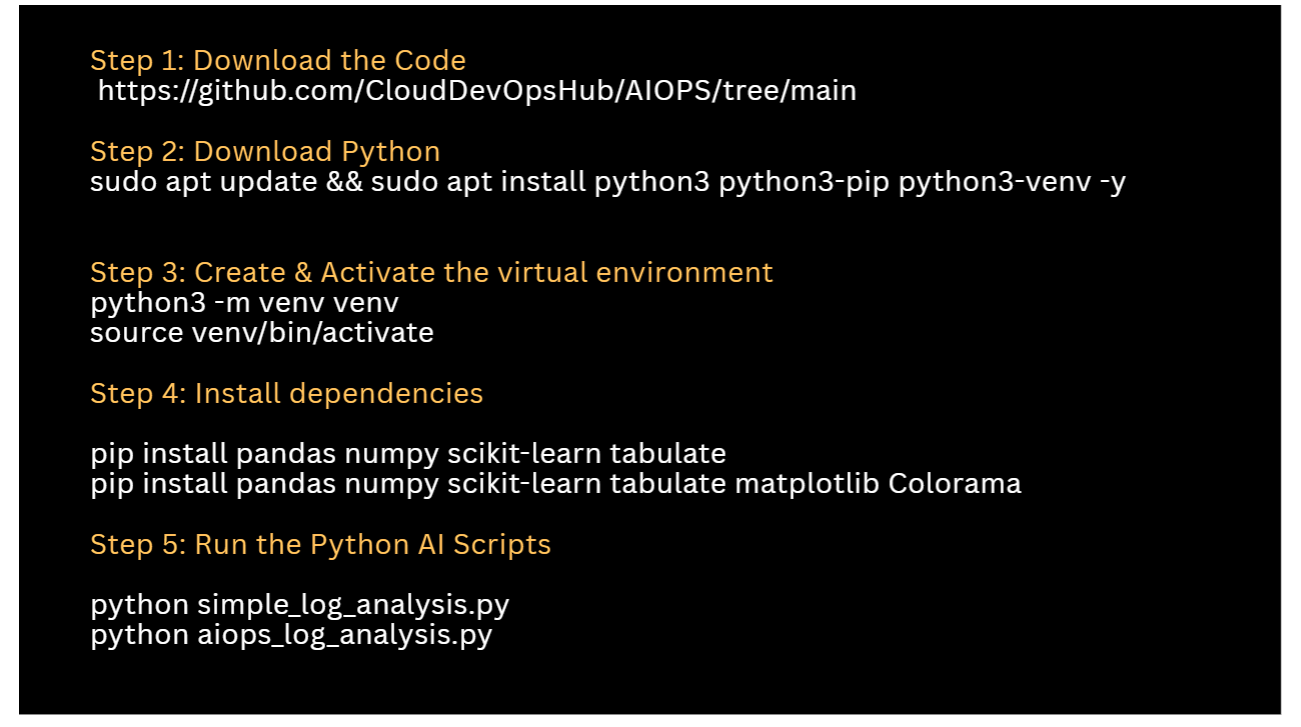
git clone https://github.com/CloudDevOpsHub/AIOps.git
cd AIOps# Update & Install Python3
sudo apt update && sudo apt install python3 python3-pip python3-venv -y
# Create & Activate Virtual Environment
python3 -m venv venv
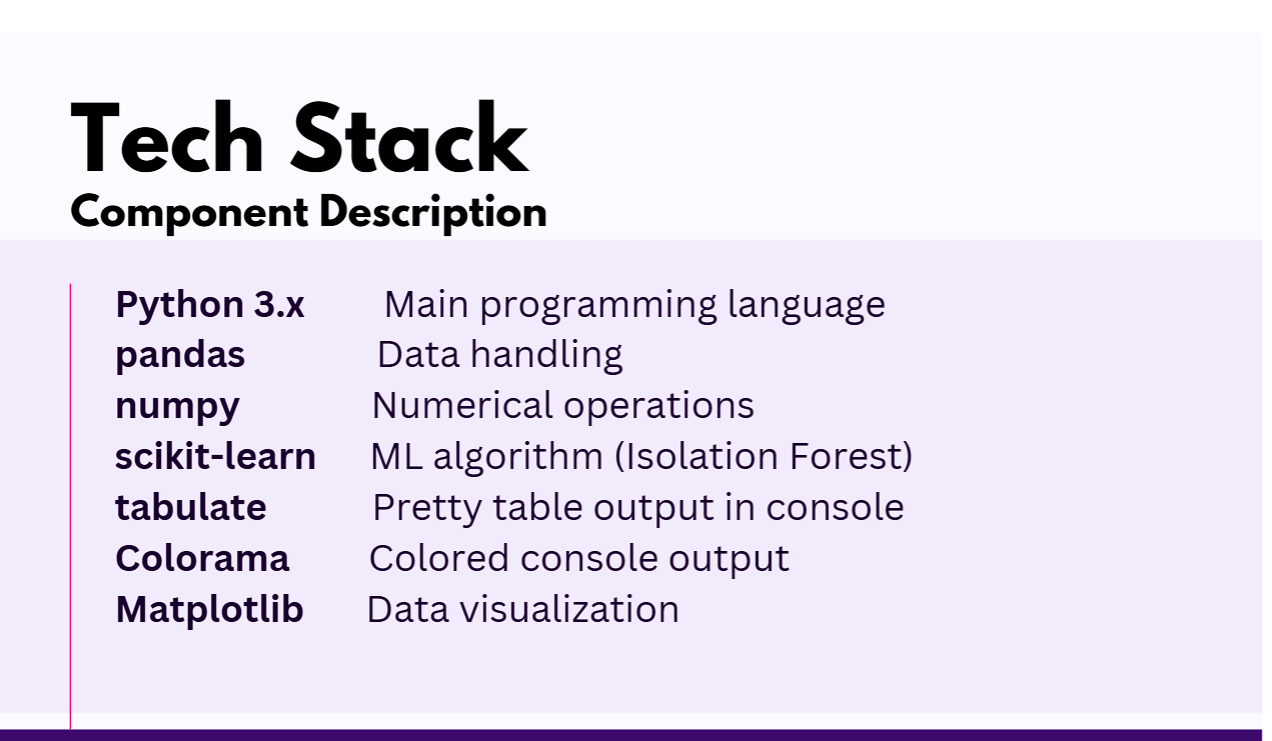
source venv/bin/activatepip install pandas numpy scikit-learn tabulate matplotlib colorama# Run Rule-Based Baseline Detector
python simple_log_analysis.py
# Run AI/ML Isolation Forest Detector
python aiops_log_analysis.py
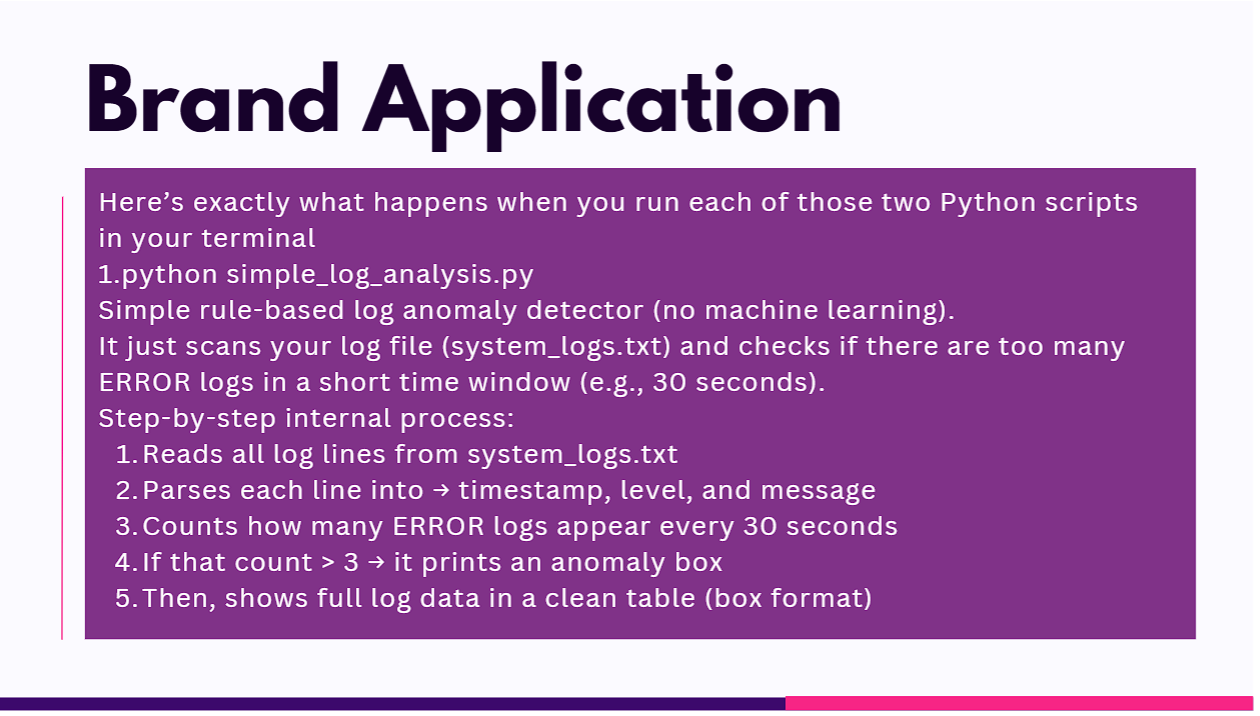
The baseline script simple_log_analysis.py scans log files using fixed thresholds (e.g. flagging an anomaly if >3 ERROR logs occur in 30 seconds). While effective for simple rules, it fails when log formats change or when silent multi-log pattern anomalies occur.
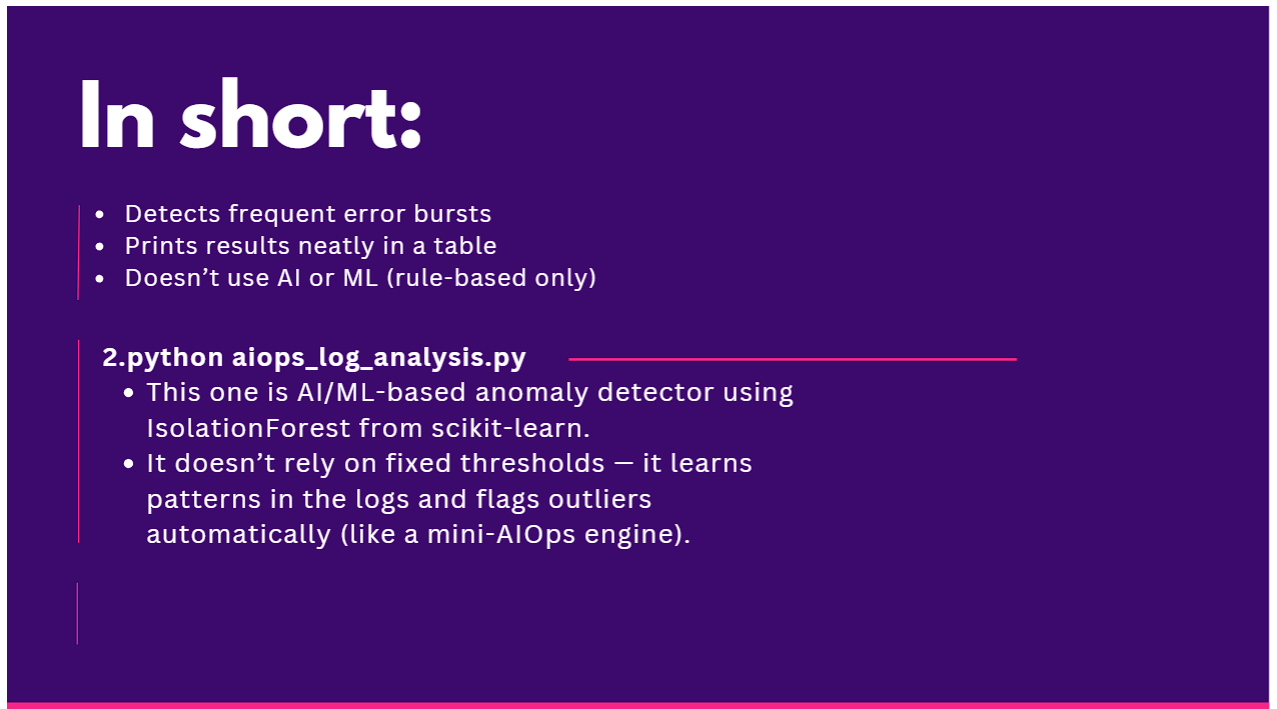
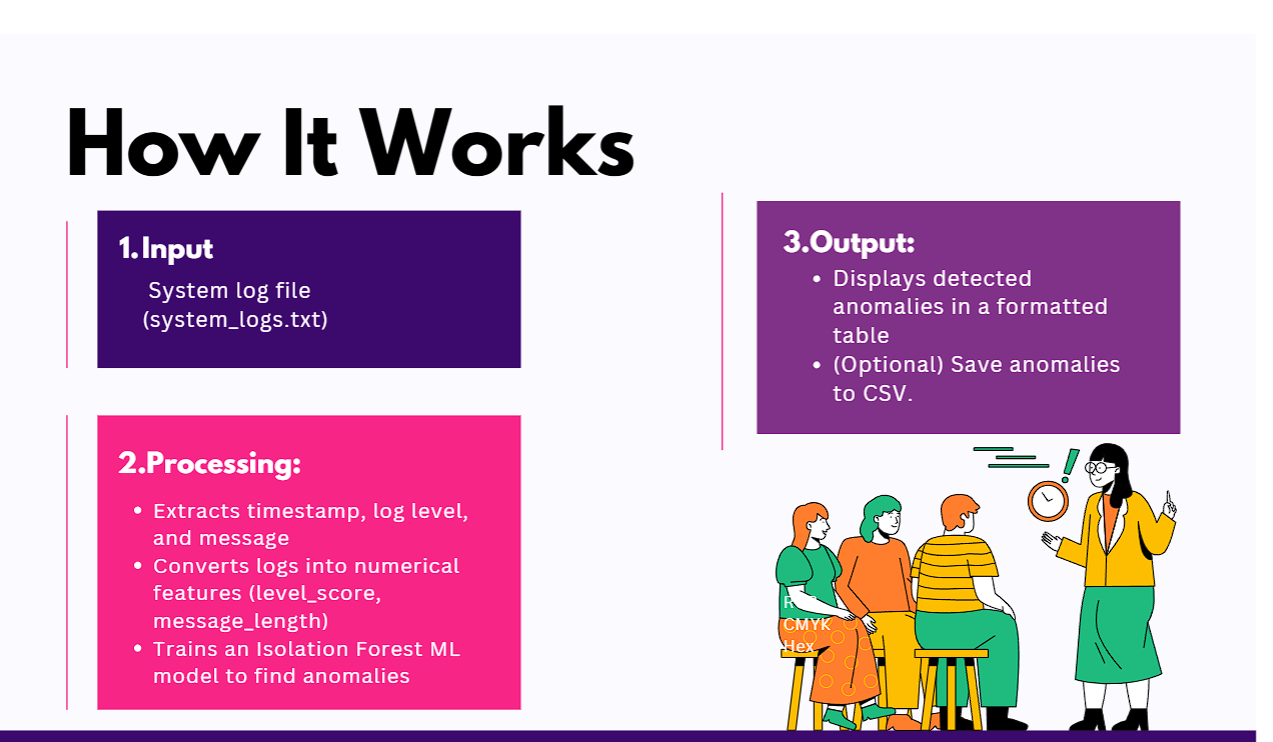
IsolationForest is an unsupervised Machine Learning algorithm that isolates anomalies by randomly partitioning feature space. Because anomalies are rare and distinct, they require fewer splits to isolate, allowing SmartLog to detect zero-day log anomalies without pre-labeled training datasets!
You can add these high-impact production bullet points to your resume based on this project:
Common real-time production & interview questions on AIOps implementation:
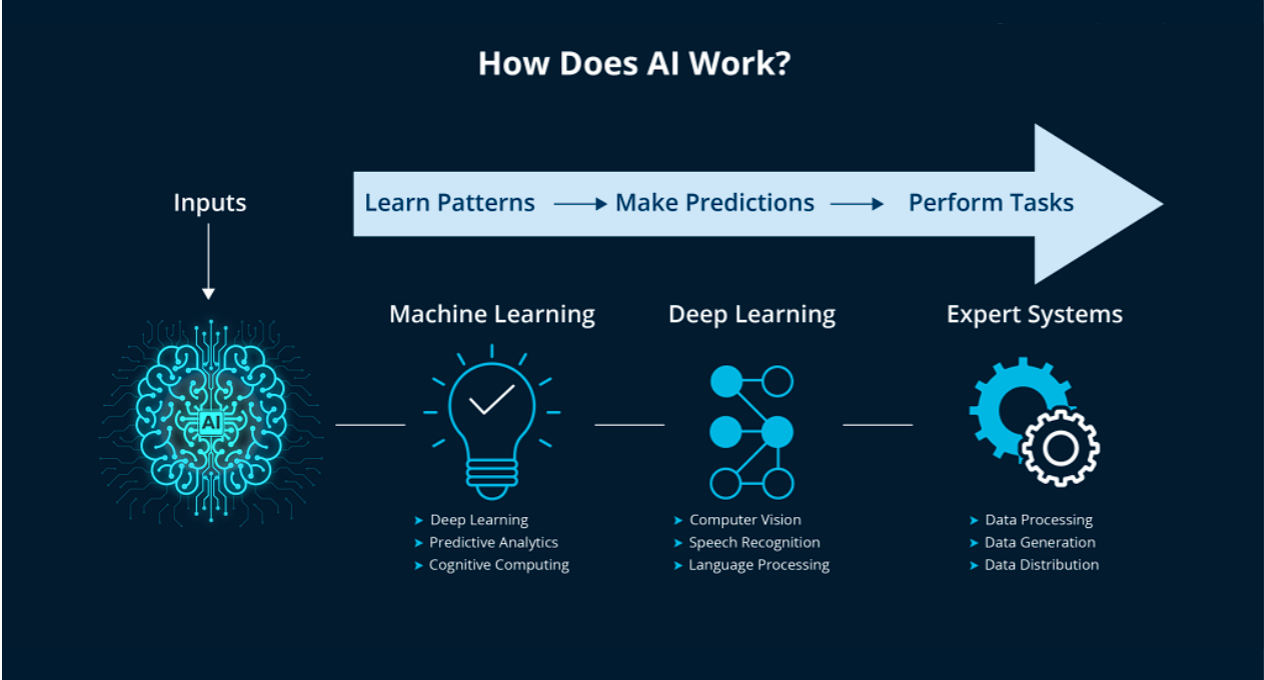
Answer: Traditional monitoring relies on static thresholds (e.g. alert if CPU > 80%) and reactive manual investigation. AIOps (Artificial Intelligence for IT Operations) uses Machine Learning to learn normal baseline behavior, correlate logs across microservices, detect anomalies in real time, and trigger proactive self-healing remediation before outages impact users.
Answer: Isolation Forest is an unsupervised tree-based algorithm specifically designed for outlier detection. Unlike traditional classification algorithms, it does not require expensive labeled training data. It isolates anomalies by building decision trees; anomalies require fewer splits to isolate because they are rare and structurally different from normal log events.
Answer: Instead of forcing engineers to manually correlate logs across multiple dashboards (Elasticsearch, Grafana, Prometheus), AIOps automatically groups related alerts into a single root-cause incident ticket and triggers automated remediation scripts, reducing MTTR from 40+ minutes to seconds.
Answer: Alert Fatigue occurs when DevOps teams are flooded with thousands of non-critical alerts per day, leading to missed critical incidents. AIOps solves this by event correlation — grouping hundreds of secondary alerts into a single actionable incident report.
Answer: Raw log lines are parsed to extract structural features: converting log levels (INFO=1, WARN=2, ERROR=3) into numerical severity scores, calculating string message lengths, computing log entry frequency in time windows, and using NLP term-frequency (TF-IDF) vectors.